
- Por Perfil.com
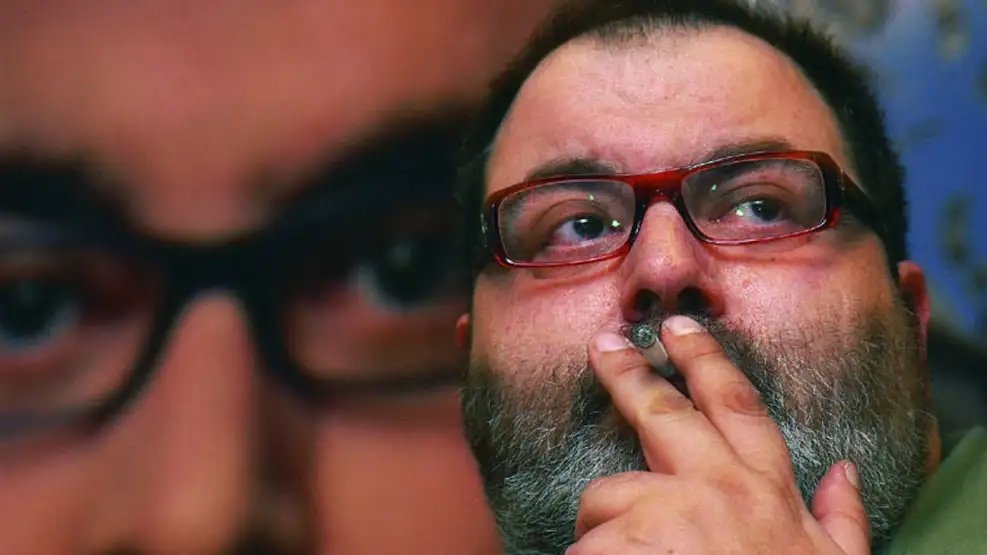
El periodista, que murió a los 64 años, protagonizó situaciones disruptivas en los medios de comunicación que, para la época, significaron un antes y un después en las maneras de informar.
Click here for translation
The journalist, who died at the age of 64, was the protagonist of disruptive situations in the media that, for the time, meant a before and after in the ways of informing.
The death of Jorge Lanata at the age of 64 does not imply, far from it, that his legacy will also disappear. And the fact is that, with a career spanning five decades (he started working at the age of 14), his path was full of moments that were part of a disruptive and daring journalism that ended up defining his professional character.
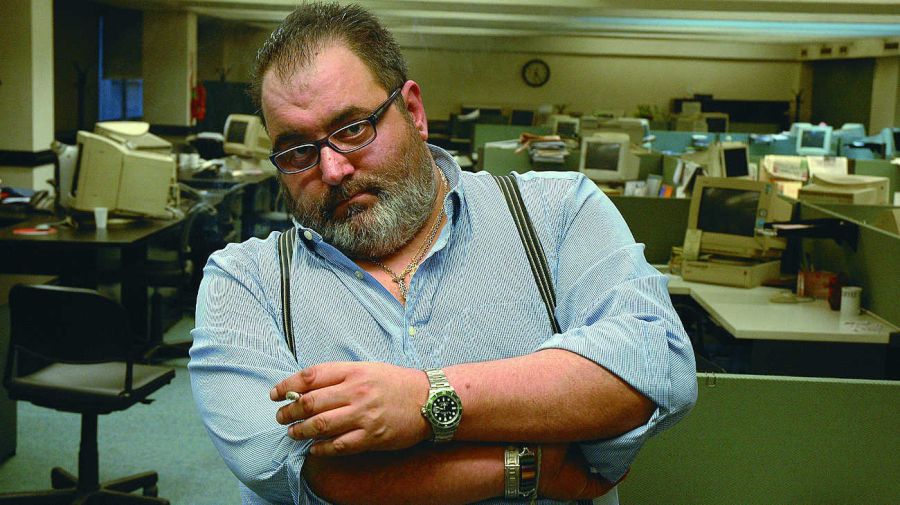
Throughout his long career, he starred in moments that, even to this day, continue to generate surprised reactions. No matter the setting; whether in newspapers, television channels or an intimate radio studio of yesteryear, he did what he felt he had to do. He smoked in studios. He provoked his interviewees. The most important thing about his career: he changed the rules of the game on more than one occasion. His radical shifts in political thinking were directly proportional to his ways of working: diverse and uncomfortable.
1. His interview with Charly García: “Bien pelotudo”.
During his program Día D, which was broadcasted by América in 2000, Lanata had one of the most remembered televised conversations in the history of Argentine journalism. Not only because of its relevance, but also because of its absurdity. Perhaps without expecting it, the moment culminated with insults, but also with laughter from both of them.
“Do I look like an artist to you?” asked García. “I don’t know”, replied Lanata categorically. And he continued: “I think you did great things, but then you started to copy yourself and you know it”. The musician’s answer was blunt: “I think you’re an asshole. But good”.
The hilarious moment ended with Lanata thanking him for the insult, and asking him “what it is to be a ‘bien pelotudo’”. It was an interview that swung between the tense and the funny, with many Charly García jokes that seemed to have no hold on the journalist.
2. The visit to Los Sauces Hotel, owned by Cristina Kirchner.
During a broadcast of his program Periodismo para Todos (PPT), which was strongly characterized as an anti-officialist (at that time, anti-Kirchnerist) program, Lanata appeared in front of the camera, made his usual monologue and then presented a report that would later become extremely important: he entitled it “Radiografía del poder K” (Radiography of K power).
There, he toured with his production team the city of El Calafate, where he visited hotels, houses and ranches belonging to officials, politicians or businessmen close to Kirchnerism. At that time, he took advantage of the occasion and stayed in the Evita suite of the Hotel Los Sauces, which belonged to the former president. According to what he described, the place was decorated with books, photos and pictures of the second wife of former President Juan Domingo Perón.
Later, he tried to do the same at the Alto Calafate lodging (belonging to former President Néstor Kirchner), but he was not allowed to stay there. “You gave me an order, I can’t let you stay,” an employee told him.
3. Amarillo/12, the provocations against Carlos Menem.
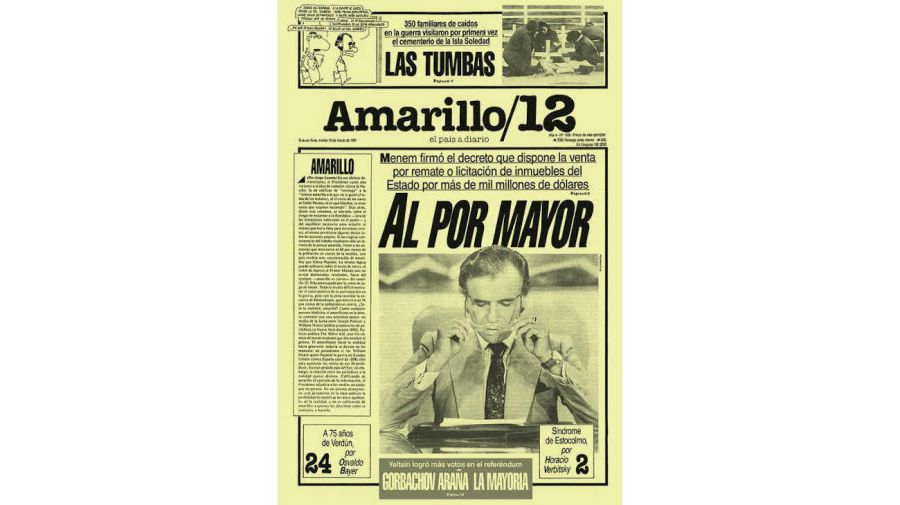
On one occasion, former president Carlos Saúl Menem called the newspaper Página/12 (founded by Lanata) a “yellow newspaper”. The journalist’s response, of course, was not long in coming. He published an edition of the newspaper with completely yellow paper and, as if that were not enough, he titled it “Amarillo/12”. In an interview with La Nación, he told how the moment went: “In Página I made Amarillo/12 one day when Menem accused us of doing yellow journalism. I had to buy yellow paper from the people who made the telephone directories, a mess!
Again, at that time when Menem was playing basketball, soccer and golf, I invented the cover Pelota/12 with the headline ‘Napoli has already made him an offer’. It was sold out. And when the distributor called me to settle the profits, they told me: ‘To whom shall I send the check’, and I said: ‘What do you mean, to whom? To the newspaper’, and they answered me: ‘No, we have to send it to Pelota/12’. I wanted to kill myself. I changed the name of the newspaper, it was sold out and we couldn’t collect the money”, Lanata laughingly recalled in the magnificent studio of his apartment in the Estrugamou palace, a room that housed as much Argentine painting as a small museum.
4. The “black hole”, defying formats.
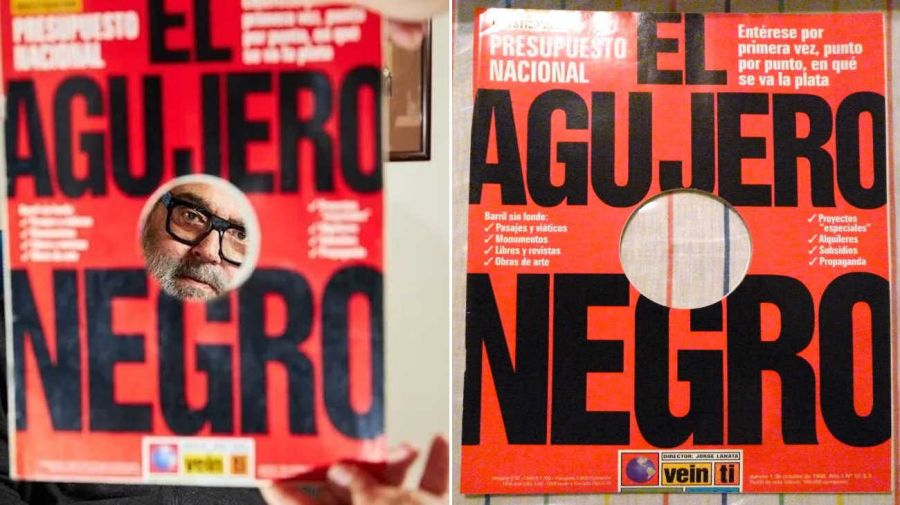
Another highlight of his career was with a magazine Veintitrés, dated October 1, 1998. It was not a conventional edition: each page had a hole in the middle. The journalist’s idea was to represent “the black hole through which the money of all Argentines was going”, in reference to the unnecessary expenses made by the State at that time. A revolutionary idea within graphic journalism, limited by its formats.
5. His silent revenge: reading on the air.
In October 2002, Lanata was hosting Detrás de las Noticias, on América. Before he started his program, Televisión Registrada (TVR) was on the air. At that time, the program was produced by Diego Gvirtz and hosted by Fabián Gianola and Claudio Morgado. The problem was that the hosts exceeded their time slot by 11 minutes. Consequently, Lanata’s program started at 11.11 pm.
This did not please the host at all. Visibly annoyed, instead of presenting his content, he appeared with a book in his hand and, looking at the camera, said: “Well, only 11 minutes past 11 pm. Let’s wait 11 more minutes to start the program, because otherwise they’ll take us for the slap. I’m going to read for a while. If you want, stay watching and if you want, put on another channel and come back, put it on 11 and 20″. Said and done, Lanata began to read in silence, while the camera filmed him.
La muerte de Jorge Lanata a sus 64 años no implica, ni mucho menos, que su legado también desaparezca. Y es que, con una trayectoria de cinco décadas (comenzó a trabajar a los 14) su camino estuvo plagado de momentos que fueron parte de un periodismo disruptivo y atrevido que terminaron definiendo su carácter profesional.
A lo largo de su larga carrera, protagonizó momentos que, incluso a la fecha, siguen generando reacciones de sorpresa. No importaba el ámbito; ya fuera en diarios, canales de televisión o un íntimo estudio de radio de antaño, hacía lo que consideraba que tenía que hacer. Fumaba en estudios. Provocaba a sus entrevistados. ¿Lo más importante de su carrera?: cambió las reglas del juego en más de una ocasión. Sus radicales cambios de pensamiento político eran directamente proporcionales a sus maneras de trabajar: diversas e incómodas.
1. Su entrevista con Charly García: «Bien pelotudo»
Durante su programa Día D, que se emitía por América en el año 2000, Lanata tuvo una de las conversaciones televisadas más recordadas en la historia del periodismo argentino. No sólo por su relevancia, sino también por lo disparatada que resultó. Y es que, quizás sin esperarlo, el momento culminó con insultos, pero también con risa de parte de ambos.
«¿A vos te parece que soy un artista?», preguntó García. «No lo sé», respondió categótico Lanata. Y continuó: «Yo creo que vos hiciste grandes cosas, pero después te empezaste a copiar a vos y lo sabés». La respuesta del músico fue contundente: «Yo pienso que vos sos un pelotudo. Pero bien».
El hilarante momento terminó con Lanata agradeciéndole por el insulto, y repreguntándole «qué es ser un ‘bien pelotudo’». Fue una entrevista que se balanceó entre la tensión y lo gracioso, con muchos chistes de Charly García que parecían no tener asidero en el periodista.
2. La visita al hotel Los Sauces, propiedad de Cristina Kirchner
Durante una emisión de su programa Periodismo para Todos (PPT), que estaba fuertemente caracterizado por ser un ciclo antioficialista (en aquel entonces, antikirchnerista), Lanata apareció frente a cámara, hizo su habitual monólogo y luego presentó un informe que, posteriormente, se volvería importantísimo: lo tituló «Radiografía del poder K».
Allí, recorrió junto con su equipo de producción la ciudad de El Calafate, donde visitó hoteles, casas y estancias que pertenecen a funcionarios, políticos o empresarios cercanos al kirchnerismo. En aquel entonces, aprovechó y se alojó en la suite Evita del Hotel Los Sauces, perteneciente a la exmandataria. Según describió, el lugar estaba ambientado con libros, fotos y cuadros de la segunda esposa del expresidente Juan Domingo Perón.
Posteriormente, intentó hacer lo mismo en el alojamiento Alto Calafate (perteneciente al exmandatario Néstor Kirchner), pero no lo dejaron alojarse. «Me bajó una orden, no puedo dejar que se quede«, le dijo un empleado.
3. Amarillo/12, las provocaciones contra Carlos Menem
En una ocasión, el expresidente Carlos Saúl Menem calificó al diario Página/12 (fundado por Lanata) de «diario amarillo». La respuesta del periodista, por supuesto, no se hizo esperar. Sacó una edición del periódico con papel completamente amarillo y, por si fuera poco, lo tituló «Amarillo/12». En una entrevista con La Nación, contó cómo fue el momento: “En Página hice Amarillo/12 un día que Menem nos acusaba de hacer periodismo amarillo. Tuve que comprar papel amarillo a los que hacían las guías de teléfono. ¡Un quilombo!».
«Otra vez, en esa época que Menem jugaba al básquet, al fútbol y al golf inventé la tapa Pelota/12 con el titulo ‘El Napoli ya le hizo una oferta‘. Se agotó. Y cuando me llaman de la distribuidora para liquidar las ganancias me dicen: ‘¿A quién le mando el cheque?’, y yo le digo: ‘¿Cómo a quién? Al diario’, y me responden: ‘No, se lo tenemos que mandar a Pelota/12’. Me quería matar. Le cambié el nombre al diario, había agotado y no podíamos cobrar la guita”, recordó risueño Lanata en el portentoso estudio de su piso en el palacio Estrugamou, un salón que albergaba tanta pintura argentina como un pequeño museo.
4. El «agujero negro», desafiando los formatos
Otro momento destacado de su trayectoria fue con una revista Veintitrés, del 1 de octubre de 1998. No era una edición convencional: cada página tenía un agujero en el medio. La idea del periodista era representar “el agujero negro por el que se iba la plata de todos los argentinos”, en referencia a los gastos innecesarios realizados entonces por el Estado. Una idea revolucionaria dentro del periodismo gráfico, limitado por sus formatos.
5. Su venganza silenciosa: leer al aire
En octubre de 2002, Lanata conducía Detrás de las Noticias, en América. Antes de que comenzara su programa, Televisión Registrada (TVR) estaba al aire. En aquel momento, el ciclo era producido por Diego Gvirtz y conducido por Fabián Gianola y Claudio Morgado. El problema fue que los conductores sobrepasaron su horario 11 minutos. Por consiguiente, el programa de Lanata comenzó a las 23.11.
Esto no le gustó nada al conductor. Visiblemente molesto, en lugar de presentar su contenido, apareció con un libro en la mano y, mirando a la cámara, dijo: “Bien, solamente 11 minutos pasan de las 11 de la noche. Vamos a esperar 11 minutos más para empezar el programa, porque sino nos toman para la cachetada. Voy a leer un rato. Si querés, quédate mirando y si querés, poné otro canal y volvé, ponéle 11 y 20″. Dicho y hecho, Lanata se puso a leer en silencio, mientras la cámara lo filmaba.
| Si tienes una historia que quieras difundir, escríbenos. If you have a story you want to spread, write to us. catalina.aguilar@caleidoscopiodigital.com |
 Caleidoscopio Digital
Deja un comentario